
Episode Overview
Orion started this show to bottle the hallway conversations at megaproject conferences. AJ Waters has been in more of those hallways than almost anyone: 20 years from a Kiewit estimating desk, where by his own count he priced well over $5B of work, to the digital transformation of Google’s data center construction, to InEight, Kahua and now Procore. This is the stories-from-the-road episode: what ten minutes on a joint-venture site tells you, why digital transformations fail (the order of operations, every time), the data wars that AI is about to force into the open, and the one-week test that exposes both your systems and your leadership.
People, process, tech. In that order.
“Why do digital transformations fail? Because we picked the tech and then tried to shove it down the people’s throat.” The framework works, he argues, only when it runs in the right direction: get the people right, then the process, then pick the tech last. “It’s always the people.”
Nebraska math kid to field COO
Told he might not be sharp enough to be an engineer, an aptitude test and a man who “knew people” landed him at Kiewit. Estimating, then the hand-raise for the tech overhaul that became a career: InEight, Google’s data centers, Kahua, Procore, and the award-winning TheEngiNerdLife blog and podcast.
Same hats. One week away.
Two field diagnostics you can run tomorrow: on a joint-venture site, are two hard-hat colors telling you “we’re not a team yet”? And if you took a week off and stayed off email, would the project keep running? If not, “your systems are broken, and your leadership is not transferable.”
A written companion to the released episode and its bonus episode, the Debrief. Quotes are transcribed from the published audio and lightly condensed for readability (false starts and fillers removed, meaning untouched); timestamps link to the moment on YouTube and are approximate (~M:SS), and Debrief times are marked. Biographical facts come from the on-air introduction, AJ’s own account (on air and in his review of this brief), and his LinkedIn profile. AJ speaks in a personal capacity, not for Procore or any former employer.
Inside the Episode
This one is built as stories rather than a single anchor project. Act I is the road in; Act II is the conference wisdom (the same-hat test, the talk he never rehearsed, the drone, the owner’s dilemma, the learning curve nobody plans for); Act III is the method (owning a failure, the people-process-tech order, truth as a moving target, the vacation test); Act IV is the takeaway. The companion Debrief (15 min) carries the advice round, the bookshelf and the story of TheEngiNerdLife.
“Growth solves everything. But the second that you apply that to digital transformation, it totally screws everything up.” AJ, at ~16:00 · and “If you don’t get the data right first, the AI’s just gonna be faster at being wrong.” at ~46:50
The learning-curve chapter is the longest stretch (12 minutes, from the rule of threes and tens to psychological safety); the data-wars chapter is the densest. The vacation test and the takeaway close it quickly.
The Road In: Nebraska to Kiewit
Lego, an aptitude test in Denver, and the man who “knew people”: how a math and physics kid became a Kiewit estimator on the company’s biggest jobs, then raised his hand for the tech side.
The Same-Hat Test
Walk onto a joint-venture site cold. If you see two hard-hat colors, you already know: “We’re not even wearing the same colors yet.”
Voluntold: The Talk He Never Rehearsed
A senior colleague waves “keep going” from the back of the room, and a green estimator gives eleven conference sessions in a day. One of them changes his career.
Stories from the Road
The drone that proved a point by never interrupting the talk, the owner’s dilemma (growth breaks people, process and tech differently), and the RFI we digitized instead of innovating.
Threes, Tens & the Learning Curve
We plan for an operational ramp-up but expect tech to work on day one; why vendors stay quiet about it, the monkeys and the bananas, and why innovation needs the safety to fail.
The Missing Floor
His biggest estimating failure: a duplicated drawing page, a whole floor of concrete missing from a self-perform estimate, and the phone call from the site. Then: own it.
People, Process, Tech: In That Order
The CliffNotes answer to why transformations fail, and the rule of his own 28 he breaks most: slow is smooth, smooth is fast.
Truth Is a Moving Target: The Data Wars
A single source of truth is only true for the people who can reach it; seat licensing, outsourced teams, who owns the data, and why AI makes bad data “faster at being wrong.”
The Vacation Test
One week away with no email. What survives tells you about your systems; what breaks tells you about your leadership. Plus a role-swap drill to run it without leaving.
Volunteer for Crazy
The takeaway: the people on stage at conferences usually volunteered for the risky thing, and when it failed, they said so.
The Guest · AJ Waters

AJ has spent 20 years in major projects on both sides of the technology line. He came up as a Kiewit estimator: second estimates on $500M-plus power plants and interstate jobs as an intern, then the primary estimating team, where by his own count he priced well over $5B of work, including three separate $1B-plus vertical building projects and the general-conditions estimates for joint-venture megaprojects. He then raised his hand for Kiewit’s systems overhaul and never rolled back off. The technology side took him through InEight, a stint leading the digital transformation of Google’s data center construction, Chief Evangelist at Kahua, and, since June 2026, Field COO for Public Sector at Procore. He writes and hosts TheEngiNerdLife, Construction & Technology Blog of the Year in 2025, and, in Orion’s words, “may be the most traveled man in construction.”
“If you don’t get the data right first, the AI’s just gonna be faster at being wrong.”AJ Waters · on the show, ~46:50
The road, as he tells it
“I grew up dreaming of construction. I was one of those kids who obviously built a lot of Lego, and I wanted to build stadiums.” Out of school, “a few folks tell me that maybe I wasn’t quite sharp enough to be an engineer.” Plan B was teaching math.
“The aptitude test came back and said I’d be a good engineer.” The man who ran it knew people in construction, fixed his résumé, taught him to interview, and landed the Kiewit internship: “I knew a guy who knew a guy.”
Second estimates on $500M-plus jobs as an intern, takeoff by hand, “coloring up the drawings before it was on screen.” Then the primary estimating team: well over $5B of work by his own count, three of them $1B-plus vertical buildings, and the general-conditions estimate for Kiewit’s half of joint-venture megaprojects, argued across the table from counterparts “20 years my senior.” Estimate reviews in DC, Denver and South Dakota gave him the travel bug.
“Instead of getting voluntold, I volunteered.” He stayed on the technology side, helped build the center of excellence, and a never-rehearsed conference talk got him the training lead for the whole system.
Product manager and solution-engineering director at InEight; program manager on the digital transformation of Google’s data center construction; back to InEight to lead industry solutions; then Chief Evangelist at Kahua.
Technology for the owners accountable for public dollars, plus a blog that became a podcast: “I don’t wanna just talk at people. I wanna talk with people.”
Path above as stated on the record and in the on-air introduction. The dated timeline below is from AJ’s LinkedIn profile.
Career journey
Employers, titles and dates from the guest’s LinkedIn profile (bands rounded to half-years; the 2019 Google stint and the Procore start are each one half-year cell).
The résumé · on-air intro + LinkedIn
- Roles
- Kiewit estimator (second estimates on $500M-plus power and interstate jobs as an intern, then the primary team: well over $5B of work by his count, including three $1B-plus vertical buildings, and joint-venture general conditions); Kiewit’s ERP and estimating-system rollout (training delivery of 200,000 man-hours over two years, per his profile); InEight product and solutions leadership; Google data center construction program manager; Kahua Chief Evangelist; Procore Field COO for Public Sector.
- Credentials
- MS, Engineering Management, University of Nebraska–Lincoln (2007) · BS, Mathematics and Physics, Doane University (2005) · Pragmatic Certified Product Manager (PCM-III) · Certified Scrum Product Owner.
- Honors
- Eagle Scout · Zenon C.R. Hansen Bulldog Award · Mt. Everest Explorer Award, 1st place, Project Control Summit 2024.
The rules, the blog, the podcast
- 28 Rules for Building Smarter
- His published list; the one he admits to breaking most is “slow is smooth, smooth is fast.” ~37:50
- TheEngiNerdLife
- A company article that sat on a shelf for nine months became a blog; a year of “talking at people” became a podcast where every episode ends with practical takeaways. Named Construction & Technology Blog of the Year, 2025. Debrief · ~11:30
- Find him
- LinkedIn: /in/watersaj · “I’m open to messages all the time… hit me up on LinkedIn, AJ Waters, super simple.” · theenginerdlife.com
The Host · Orion Matthews

Orion is an award-winning programmer, entrepreneur and technology executive who has spent the last decade in the engine room of major capital projects. He founded Queryon in Washington, D.C. in 2015 with a focus on data analytics and software for the construction industry, starting with bellwether client BP, whose project-controls solutions his team deployed globally, from the North Sea to Azerbaijan to Houston. Today he's a recognized expert in PMO data analytics and project-controls reporting, serving billion-dollar portfolios for owners including BP, Santos, Balfour Beatty and Turner & Townsend, a regular speaker at major industry conferences on AI and analytics in capital projects, and the host of this show.
Why this pairing works
- The hallway
- Orion built the show to bottle the conversations that happen after the conference talks; AJ has sat through hundreds of those talks and given plenty. The episode is structured as those hallway questions: walk onto a site cold, the best talk you ever saw, the vacation test.
- The data war
- Orion argues data strategy and AI strategy are now the same thing, and names the trap “garbage in, poisonous sugar cookies out.” AJ’s version lands the same way: get the data right first, or the AI is “just gonna be faster at being wrong.”
Beyond the PMO
- The builder’s arc
- Founded Introspect Software out of high school; built and sold Design-PT (acquired 2015). His software has run from McMurdo Station to aircraft carriers, with write-ups in Scientific American, CNN and Maxim, and a BP Helios Award.
- Rakuten’s Hiroshi Mikitani and the rule of threes and tens: “Things break in threes and tens,” and megaprojects scale through all of them at speed. ~19:00
- The personal-trainer problem: nobody sells the first six months of pain, so maybe “we’re overselling” the transformation. ~22:50
- The monkeys and the bananas: systems that “never even remember why the original rule was set,” and why the one who grabs the banana is worth keeping. ~24:00
- Blame “is like a cancer inside these organizations,” and hiding bad news is the second career killer. ~35:00
- Seat licensing and outsourced teams as structural causes of “truth lag,” and AI as the thing that turns the data wars hot. ~41:40
The Road In: Nebraska to Kiewit
Orion’s opening question sets the format: how does a math and physics kid from Nebraska end up on billion-dollar job sites? The answer runs through a doubt, an aptitude test and a man who knew people, then an estimating desk at Kiewit and, a few years later, a hand raised for the technology overhaul that became the rest of his career.
“I grew up dreaming of construction. I was one of those kids who obviously built a lot of Lego, and I wanted to build stadiums and be a part of major projects. So when I came out of school I had a few folks tell me that maybe I wasn’t quite sharp enough to be an engineer, and that’s where the math and physics came in.”AJ Waters · ~1:30
“The aptitude test came back and said I’d be a good engineer. And well, all right, then maybe I can make this 360… that landed me an internship with Kiewit the summer after my undergrad senior year before my post-grad work, and that’s what started the role. So I knew a guy who knew a guy and that was like guilty by association in a good way.”AJ Waters · ~2:30
Estimating, by hand first
“I got into doing takeoff and estimating by hand, coloring up the drawings before it was on screen.” Then the general-conditions estimate for Kiewit’s half of joint-venture megaprojects: “I’d be sitting across the table from a counterpart that was 20 years my senior trying to argue why we need this many engineers or this many porta potties or this many labor hours to clean the site.”
Volunteered, not voluntold
In the early 2010s Kiewit was overhauling all of its systems. “I actually raised my hand. Instead of getting voluntold, I volunteered for that and said, ‘Hey, I kind of see this new iPhone thing and where it’s going. It looks fun, and I wanna go hang out with these folks and work on some tech for a little bit.’ And I fell in love with it while I was there.”
- The intro: 20 years from Kiewit estimator to Google’s data centers to Kahua, now Field COO for Public Sector at Procore, and the host of TheEngiNerdLife. ~0:20
- The internship: “We were doing second estimates on 500 million and up power plants on infrastructure, interstate jobs.” Full-time, he moved onto the primary estimating team. ~3:30
- The travel bug came from estimate reviews “in DC, in Denver, in South Dakota.” ~4:40
- On staying in tech: “I was just one of those strange cases where it was like, ‘Oh, that looks cool. Let’s go try that.’” ~6:10
The Same-Hat Test
The first of Orion’s road questions: you walk onto a site cold, what tells you in ten minutes that it is in trouble? AJ’s answer is a joint-venture tell you can read from the parking lot. It is also the episode’s first argument that the intangible, psychological stuff decides more than the plan does.
“If they’re a joint venture and there are two different hats, right? If you see multiple hard hats around the job site, different colors or what have you, then right then and there I say, ‘We’re not a team. We’re not even wearing the same colors yet.’ And so there’s going to be some push and pull that’s gonna happen, and whoever’s got the extra half a percent or whatever in their side of the project is the one that’s going to be trying to force their authority.”AJ Waters · ~7:10
“When you’re practicing against your own teammates and you’re wearing the different color jerseys, it’s a different feel than when you’re all suited up in the same jersey on game day… Psychologically, getting in the same colors changes the way that you view the person next to you, even when you’re supposed to be doing the same thing.”AJ Waters · ~8:30
- “It’s just an inherent us versus them that you never addressed out of the gate.” ~8:00
- Orion’s read: the projects that fail this test “just sort of turn into political battles.” ~7:50
- “It’s one of those intangibles that it’s hard to measure.” ~9:20
Voluntold: The Talk He Never Rehearsed
Orion asks for a conference story that was not on script, and gets the one that made AJ’s career. A senior colleague with a rough trip asks him to start the presentation and jump in later. The jump-in never comes. By the end of the day, one attendee in the room had found the person to run training for the whole system.
“He says, ‘Hey, I need you to start the presentation for me. Just get the first part going, and I’ll jump in when I’m ready.’… And I’m getting to the part where it’s time to transition, right? And the guy that I’m gonna throw it to is standing in the back of the room, and he’s just signaling, keep going.”AJ Waters · ~10:40
“So I give both halves in the same talk, and we did four before lunch. We did four after lunch. They proceeded to let me do the last three by myself the rest of the day. And just so happened one of the gentlemen who came through as an attendee during one of those sessions was looking for a new lead to run the training and the rollout for the remainder of the tools after estimating.”AJ Waters · ~11:40
The useless skill that worked
“I have this unique ability to memorize songs in movies after one time hearing or seeing them. It’s totally useless unless you like karaoke. But it worked for me there because that’s what I used to figure out that talk when I had never even rehearsed it.”
Orion’s lesson
“You never know if you’re gonna get put on the spot. You’re lucky that you could nail it. But if there’s anyone listening that’s like, ‘Oh, I’m gonna be going and sitting in the back,’ it’s like, mm, maybe not. Better be prepared.”
Stories from the Road
Three stories from the conference circuit, each carrying a point. The best talk he ever saw proved its thesis without saying it. His own two favorites are frameworks he still uses: the owner’s dilemma (growth breaks people, process and tech in different ways) and strong opinions, loosely held (we digitized the RFI instead of asking whether it should exist).
“Instead of just sitting there, and slide after slide after slide after slide, the drone flew in. And they had it scan across the top of the audience, and just run a flight path during the presentation… The gentleman on stage said, ‘Hey, look the drone’s done. We have theoretically a brand-new set of quantities, and I never stopped standing up here presenting to you.’”AJ Waters · ~14:00
“Growth solves everything. But the second that you apply that to digital transformation, it totally screws everything up. Like, growth causes your people to have to go work thin, learn new things… When it comes to your processes, growth can either bloat them or expose them, right? And then when it comes to your tech, growth causes you to either not be able to scale the tech that you got or you start trying to force stuff into the tech that you have that it wasn’t really meant for, which is why Excel ends up getting used for so much stuff.”AJ Waters · ~16:00
Non-invasive, demonstrated
“This technology is non-invasive. Which is something that we all want from our tech… you think you’re just, ‘Oh, he’s just here to show off his drone, and it’s distracting.’ And really what he was doing was delivering the most important point of the entire talk.”
The RFI we never questioned
“We’ve been so focused on how construction should do things that even our technology went out and digitized how we did things… We didn’t innovate the RFI with tech. We just made the paper form digital. That’s all we did.”
“It’s okay to have that grounded opinion, that thing that you’re adamant about, but the second that you get proven that it’s no longer necessary, maybe you should let go of that stronghold and hold it a little looser.”AJ Waters · ~18:10
- The owner’s dilemma talk walks growth through people, processes and tech one at a time. ~17:00
- “Strong opinions loosely held”: a phrase he credits to a famous TED talk and, before that, to a futurist whose name he half-recalls on air (Paul Saffo coined it). ~17:20
- “Now that the paper’s out of the way, what could we do instead?” ~17:50
Threes, Tens & the Learning Curve
The longest stretch of the episode starts with Orion’s rule of threes and tens (systems break at 3, 10, 30, 100) and lands on the sharpest observation of the night: construction plans for a learning curve on every operation and expects none from its technology. From there: why vendors stay quiet about the dip, the monkeys and the bananas, and why a culture of innovation needs the safety to fail.
“We plan for it operationally but not with our tech. Because when you look at how we schedule projects, like we know there’s a learning curve at the start of an operation, and we don’t expect to get our full production in the first couple weeks of that big operation… No, you’re gonna be slower because you’ve never used it before, just like you are on an operation. And we just inherently get that when it comes to the operations, but when we look at the tech we’re like, ‘Oh, this is terrible. The tech must suck because we slowed down.’”AJ Waters · ~20:10
“We just don’t have that conversation up front because maybe we’re afraid that it’ll risk the deal, or maybe we’re afraid that people will get cold feet on the change and turn back.”AJ Waters · ~21:40
Orion: threes and tens
Rakuten’s Hiroshi Mikitani: “Things break in threes and tens.” A two-person team becoming three throws out its processes; three to ten breaks again; then 30, 100, 300. “Kind of applies to mega-projects really because you’re scaling up so fast, it’s like you’re breaking as you go really quickly.”
Orion: the monkeys
The banana experiment: generations later, the group still punishes the banana-grabber and nobody remembers why. “Systems can get in place that are inefficient, stupid, and the group will self-reinforce those processes and never even remember why the original rule was set.” Which is why the challenger is worth keeping.
“A true culture of innovation takes courage, number one, because you have to be willing to challenge that old school thinking, and number two, it requires the psychological safety to fail. Which in construction, we’re so risk averse, we don’t often give people that room to fail… not just reward people who are right, but reward people who are learning.”AJ Waters · ~25:30
- Orion’s trainer analogy: “Your first six months of training, it’s gonna be horrible. You’re gonna hate it. Nobody starts that way.” So maybe tech is oversold. ~22:50
- “For the longest time construction has been one of those just beat it out, tough it out, do the hard thing.” The shift is coming from who the owners are and who the industry must recruit. ~27:40
- “We’re retiring more than we’re bringing in. That’s for sure.” But the younger people he does meet at conferences “are the types of people that can take us to that next generation.” ~29:10
The Missing Floor
Psychological safety, role-modeled on a public podcast: Orion asks for a failure he caused. AJ’s is the lead estimator’s nightmare, a self-perform concrete estimate on a hotel addition that was short an entire floor, caught only when the site called to say it was burning through quantity. The lesson is not the error. It is what he did in the hour after the call.
“One of the structural drawings said floor seven and eight… I caught it the first time we did the preliminary takeoff, and I duplicated that page in on-screen takeoff, which doubled up the quantities… By that time it was a full estimating team. I was the lead estimator. Someone else was doing the self-perform estimate, and I totally missed the fact that we didn’t have floor seven and eight duplicated again. Everybody missed it, but I take full responsibility as the lead estimator.”AJ Waters · ~30:50
“They’re through like floor four and I get a phone call from the job site, ‘Hey, we’re burning through quantity on the concrete and we can’t figure out why.’ And we start digging in and sure enough, there it was. We skipped a whole floor on concrete material. Luckily, we had a good contingency on that job and we were able to cover it, but that was a major fail that I caused, and to this day, people don’t let me live that one down.”AJ Waters · ~32:10
Own it
“The worst thing you can do is try to cover it up. Own it. Explain what happened. ‘Here’s what I learned. Here’s how we move forward.’ So come to the table with some options to move forward. Own the mistake. Tell the truth. That’s the easiest way to get past it.”
Orion: the two career killers
“Nobody ever blames anyone… blame is like a cancer inside these organizations. And you will end up getting fired over it… And then the second is bad news early. If you hide or obscure information to try to smooth out something that is an obvious problem, that’s another death mark.”
- The number that saved it: formwork was priced by a sub and was right; the miss was material and labor. ~31:50
- “Within an hour I knew what was wrong from that phone call.” Then the walk down the hallway to the boss. ~33:20
- “The worst thing is blaming someone else, which I could have easily done… But no, that was my responsibility as the lead estimator to double check that work.” ~34:10
- The book behind the reflex: Extreme Ownership. “In every situation you played a role, just accept that role and move on.” ~34:30
People, Process, Tech: In That Order
Twenty years inside digital transformations, condensed to a CliffNotes answer. The people-process-technology framework is not wrong; the order usually is. Then Orion turns AJ’s own 28 Rules on him: which one does he break most? The answer comes with a Marine Corps phrase and, from Orion, a sinking submarine.
“My easy answer, the CliffNotes answer is we get the order wrong. Okay? So in my personal opinion, digital transformation, the reason that the people process technology framework works is because we do it in that order. You get the people right first, then you figure out the processes, then you pick the tech last. Why do digital transformations fail? Because we picked the tech and then tried to shove it down the people’s throat.”AJ Waters · ~36:00
“Regardless of what that new shiny tech looks like to an executive in a boardroom, ‘Oh, that’s the dashboard I need,’ or ‘That’s the process that we want,’ the person pushing the buttons out in the field makes it look that way, and if you didn’t ask them if it’s harder or twice the work or triple the entry or whatever, and you find out after the fact, it’s never gonna get adopted.”AJ Waters · ~37:00
The rule he breaks
“Slow is smooth, smooth is fast. I tend to hurry. Not because I’m in a hurry, I just like to work fast… I have a real problem with the slow down a minute, let’s pause, let’s double take and figure this out. I’m just like, let’s move. Let’s fail fast. All those things where I could have avoided the fail altogether if I paused for a minute.”
Orion: the submarine
Trainees with 60 seconds to crank open a compartment door, panicking. “What they were trained on was slow is smooth. So they realized, ‘I’m panicking,’ and they took 15 seconds of breathing… and then they realized, we gotta turn it the other way.” Megaprojects need that behavior too: “stop, think, meditate, and then decide what you’re gonna do.”
- “Or we decided that we needed to revolutionize this one process, and we went out and got the tech, and we never once asked the people who had to use it what they thought.” ~36:30
- Orion: “So you’re saying tech was never really the hard part, it’s the people?” AJ: “Yeah. It’s always the people.” ~37:20
- “I stole that phrase from the Marines. They’re the ones who are famous for it.” ~39:30
Truth Is a Moving Target: The Data Wars
Another of the 28 rules: truth on a project is a moving target. A drawing revision makes yesterday’s truth false, so a single source of truth only works if everyone can reach it. Orion raises the two structural reasons they can’t, per-seat licensing and organizational walls, and AJ names what that has produced: the data wars, over who owns the project’s truth. Then AI enters, and both hosts agree it will force the fight into the open.
“What’s true today is not necessarily true tomorrow. A perfect example is a drawing revision… if anyone is missing access, truth to them is no longer truth, right? And so what is true to me is not true to you if you have a different view of it, and that instantly causes conflict and trouble and rework.”AJ Waters · ~40:00
“It’s created the data wars, or what I’m calling the data wars, because of data ownership, right? Because which system is the actual truth, and who owns it? Does the owner? Does the contractor? Whose system is the actual source of truth, and how are we gonna fight over whose ownership that is? Because at the end of the day, the owner wants all that when the project’s over.”AJ Waters · ~43:40
Orion: truth lag by licensing
Per-seat pricing means procurement, which needs the truth four times a quarter, gets an Excel file instead, “and now they’re part of the truth decay, truth lag because you didn’t wanna pay for a seat.” Outsourced teams without network access get it by email. Two structural problems: licensing models and security constraints.
AJ: how the fight resolves
Unlimited licensing, the digital-twin conversation, and platforms that finally talk to each other. “I think IFC was the first thing. BIM went, ‘All right, we’re gonna have a single file type no matter the authoring platform.’… Now the platforms are starting to connect themselves a little bit, and I think that’s gonna help a lot.”
“If you don’t get the data right first, the AI’s just gonna be faster at being wrong.”AJ Waters · ~46:50
“It’s no longer garbage in, garbage out… AI will just fill in. AI will make it look right. And that’s the insidious trap. It’s garbage in, poisonous sugar cookies out that look delicious and will kill you.”Orion Matthews · ~48:50
- Orion: “Data strategy and AI strategy are the same… if you don’t win your data war, your AI strategy is bombed.” He expects open discussion of it within 24 months. ~45:50
- A third combatant: the platforms themselves, monetizing or training on your data. ~45:00
- Orion’s executive scenario: the beautiful monthly PDF, last month’s finance email and a folder of field reports, all thrown into an AI, and “the truth has to be curated a little bit.” ~47:30
- AJ’s close: “It always looks like an incredible answer, and it’s incredibly wrong.” ~49:10
The Vacation Test
The last of the 28 rules on the table, and the one most teams fail. It is a systems question and a leadership question at once, which is why AJ likes it: one week away, no email, and you learn two things about your project. He also offers a way to run it without leaving, and admits which half he fails.
“If you can’t walk away and your team operate without you, your systems are broken, and your leadership is not transferable. And so that’s what the vacation test is. If you can’t take a week off of work and everything still runs smoothly, then you have a systems problem and a leadership problem. And so it’s both personal and organizational, which is interesting.”AJ Waters · ~49:40
The standup drill
“Pick someone in your weekly standup and say, ‘All right. This week you don’t get to do your normal job,’ and pick the second person, ‘You don’t get to…’ And swap them, right? You kind of swap it out and make sure that people can operate without.”
The honest version
“Ideally the best way to test it is to just practice it: to take time off, to renew, to refresh, and to avoid your email. This is probably another one that I fail at really badly… I’m a zero inbox guy… so at least I don’t come back to 1,000 emails. I come back to 100.”
Volunteer for Crazy
Orion asks for the one nugget to leave with. AJ goes back to the risk-averse industry and the two career killers, and flips them: the thing that accelerates a career is being willing to take the risk nobody else wants, and being honest when it fails. It is also, he says, why he talks and writes at all.
“What can be a rocket ship for a career is being willing to take risks. Volunteering for crazy, right? Like that one project that sounds like it’s gonna be a horrible project. It’ll be awesome to build, but it’s gonna be like a bear. We got a tight schedule, bad budget, logistical nightmare, whatever it might be, and volunteering for that.”AJ Waters · ~52:50
“Most of the stuff that I talk about at conferences, most of the stuff that I write about in blogs are things I’ve done wrong. They’re failures. And here’s what we learned… My goal is to hope that you don’t have to screw up the same way, and that’s why I share it, so you don’t have to step on the same landmine that I already blew up on.”AJ Waters · ~54:20
- “A lot of times the people who are up on stage sharing a success volunteered to do something crazy or risky or that wasn’t a sure thing, and it paid off.” ~53:40
- The sign-off: “Hit me up on LinkedIn, AJ Waters, super simple.” ~55:50
The Big Ideas
Four frameworks worth stealing from this episode, drawn as they were described on the record.
The failing order · tech first
- An executive picks the shiny dashboard
- The tech is picked, then they “tried to shove it down the people’s throat”
- Nobody asked the person pushing the buttons
- Harder, twice the work, triple the entry: never adopted
reversed
The working order · people first
- Get the people right
- Then figure out the processes
- Then pick the tech, last
- “It’s always the people.”
“What’s true today is not necessarily true tomorrow.” A drawing revision, a change order, an RFI: the target shifts, so the connection has to be live.
Seat licensing and organizational walls push people onto emailed Excel files. “If anyone is missing access, truth to them is no longer truth.” Orion’s name for it: truth lag.
The data wars: owner’s system or contractor’s? The owner needs the real truth at handover; the platforms want to monetize it in between. IFC was the first truce; connected platforms are the next.
Data strategy and AI strategy are now the same thing. Layer AI on stale, fragmented data and you get “garbage in, poisonous sugar cookies out”: answers that look incredible and are incredibly wrong.
Decisions stall, questions pile up, the project waits for you: “your systems are broken.” A systems problem.
If the team can’t operate without you, “your leadership is not transferable.” A leadership problem. The test “points powerfully at two different things.”
In the weekly standup, pick two people, take away their normal jobs for the week, and swap them. Then see what still runs.
“Take time off, to renew, to refresh, and to avoid your email.” The test only counts if you actually stay off the inbox.
From the Debrief
The conversation picks up where the main episode ends, with the advice round: for students wondering whether AI is eating the entry-level jobs, for technologists who want into construction, and for the kid who was told he was not smart enough. Then the bookshelf, the podcasts and conferences he rates, and how a shelved company article became TheEngiNerdLife. Quotes are transcribed from the Debrief and lightly condensed; timestamps are approximate and keyed to the Debrief.
“Construction is cool. Go tell all your friends, because we’d love to have you all. And it’s purposeful, it’s fun, it’s ever-changing, it’s challenging.”AJ Waters · Debrief, ~0:30
On AI and the entry level
“AI is not gonna replace you, but someone who knows how to use it will. Just get good at using it. The prompt engineering is a real thing. Like, asking the right questions of AI means a lot.”
Debrief · ~1:00
Room for you either way
“Whether you’re coming from college in a degree for more of an engineering role, or whether you’re coming straight out of high school and you wanna be a superintendent, a foreman, out in the field, we got room for you either way.”
Debrief · ~1:40
For the techies: get curious
The comp-sci path into construction runs through context: “Go to a construction conference. See if you can visit a job site… the context is huge in this industry.” His example: a robotics team assuming a flat concrete floor that, on a real job, is often poured last.
Debrief · ~2:50
You are you
“You are you. You’re not someone else. You’re not someone else’s experience. You’re not someone else’s learning abilities. You are you… don’t let comparison steal your joy.”
Debrief · ~4:40
The book he recommends most
Leadership and Self-Deception, and its crying-baby example: two parents each waiting for the other to get up, each building a case against the other. “It’s an incredible book about how problems really start based on your actions, not someone else’s.”
Debrief · ~6:40
Why the podcast exists
“After a year of talking at people, I was like, ‘I don’t like this. I don’t wanna just talk at people. I wanna talk with people. I wanna share stories with people. I wanna learn from people.’”
Debrief · ~12:00
Genius, he argues, “is as common as dirt”: if you feel you are not smart enough for something, “it might just be that you’re not put into the right stream of people, because people move together.” And one more book for the self-deception shelf: The Courage to Be Disliked. Debrief · ~5:30 and ~10:30
Bookshelf & Links
Everything the two episodes point to, with real links: the three books, the podcasts he came up on, the associations and the two conferences he rates, his own blog and show, and where to find the people and the podcast.
Books
- Own it
- Extreme Ownership, Jocko Willink and Leif Babin: “In every situation you played a role, just accept that role and move on.” ~34:30
- His favorite
- Leadership and Self-Deception, The Arbinger Institute: “my probably favorite book to recommend to people.” Debrief · ~6:30
- Orion’s add
- The Courage to Be Disliked, Ichiro Kishimi and Fumitake Koga: Adlerian psychology on how people reshape their perceptions to fit their goals. Debrief · ~10:30
Podcasts & writing
- His own
- TheEngiNerdLife Podcast: each guest’s “superpower” and the practical takeaway you can implement tomorrow. The blog is where the 28 Rules for Building Smarter live.
- Came up on
- Construction Brothers (Eddie and Tyler Campbell), “still one of my all-time favorites,” and The ConTechCrew. Debrief · ~8:30
- Also rated
- “This one called the Megaprojects Podcast… The host is a lot of fun.” Yes, that one. Debrief · ~8:50
Associations & conferences
- Associations
- ASPE (“as an estimator”), CMAA, CURT, DBIA and AACE: “It kinda depends on what your role is in construction and what makes sense.” Debrief · ~9:10
- The yearly one
- Western Winter Workshop: “It’s more networking than conference, which is why I like it.” Debrief · ~9:50
- Every three years
- CONEXPO-CON/AGG: “the world on steroids for construction. 100,000 people descend on Las Vegas.” Debrief · ~10:00
The episode
- Listen
- Apple Podcasts · Spotify
- Bonus
- “Getting In & Growing Up: Career Advice & the Story Behind TheEngiNerdLife” on YouTube (15 min) · Apple Podcasts · Spotify · the summary in this brief
- The guest
- AJ Waters on LinkedIn · theenginerdlife.com
- The host
- Orion Matthews on LinkedIn · Queryon
- The show
- themajorprojectpodcast.com: new conversations from the people building projects over US$1 billion.
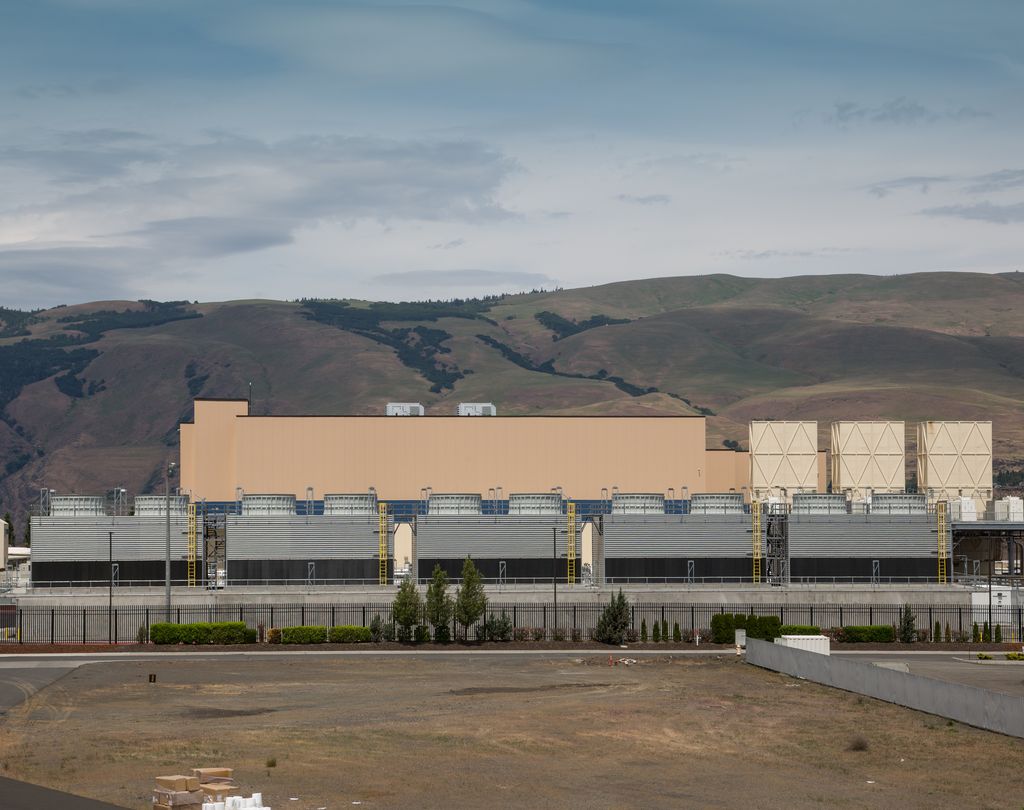
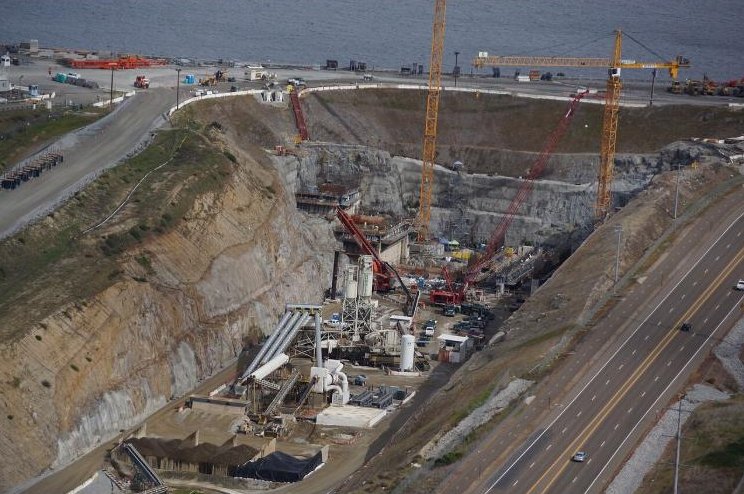
Banner photos, self-hosted: a Google data center in The Dalles, Oregon (the data center construction program AJ ran transformation for at Google), by Tony Webster, CC BY 2.0; and the Folsom Dam auxiliary spillway under construction in March 2013, the kind of heavy-civil job site a Kiewit estimator prices, by the U.S. Army Corps of Engineers Sacramento District, public domain.
Quote Bank
The best on-the-record lines from both episodes, gathered in one filterable place. “Highlight” marks the lines most worth scrubbing back for; quotes are lightly condensed and timestamps are approximate.
The Road In 0:00–~6:30
- “I grew up dreaming of construction. I was one of those kids who obviously built a lot of Lego, and I wanted to build stadiums and be a part of major projects.”
- “So I knew a guy who knew a guy and that was like guilty by association in a good way.”
- Highlight“Instead of getting voluntold, I volunteered for that and said, ‘Hey, I kind of see this new iPhone thing and where it’s going. It looks fun.’”
The Same-Hat Test ~6:30–9:40
- Highlight“If you see multiple hard hats around the job site, different colors or what have you, then right then and there I say, ‘We’re not a team. We’re not even wearing the same colors yet.’”
- “It’s just an inherent us versus them that you never addressed out of the gate.”
- “Psychologically, getting in the same colors changes the way that you view the person next to you, even when you’re supposed to be doing the same thing.”
Voluntold ~9:40–13:10
- Highlight“The guy that I’m gonna throw it to is standing in the back of the room, and he’s just signaling, keep going.”
- “I have this unique ability to memorize songs in movies after one time hearing or seeing them. It’s totally useless unless you like karaoke. But it worked for me there.”
- “You never know if you’re gonna get put on the spot… Better be prepared.”
Stories from the Road ~13:10–18:30
- “The capture of the data did not interrupt my flow.”
- Highlight“Growth solves everything. But the second that you apply that to digital transformation, it totally screws everything up.”
- “Growth causes you to either not be able to scale the tech that you got or you start trying to force stuff into the tech that you have that it wasn’t really meant for, which is why Excel ends up getting used for so much stuff.”
- Highlight“We didn’t innovate the RFI with tech. We just made the paper form digital. That’s all we did.”
- “The second that you get proven that it’s no longer necessary, maybe you should let go of that stronghold and hold it a little looser.”
Threes, Tens & the Learning Curve ~18:30–30:30
- “Things break in threes and tens.”
- Highlight“We plan for it operationally but not with our tech.”
- “When we look at the tech we’re like, ‘Oh, this is terrible. The tech must suck because we slowed down.’”
- “We just don’t have that conversation up front because maybe we’re afraid that it’ll risk the deal.”
- “Systems can get in place that are inefficient, stupid, and the group will self-reinforce those processes and never even remember why the original rule was set.”
- Highlight“A true culture of innovation takes courage, number one… and number two, it requires the psychological safety to fail. Which in construction, we’re so risk averse, we don’t often give people that room to fail.”
- “Not just reward people who are right, but reward people who are learning.”
- “We’re retiring more than we’re bringing in. That’s for sure.”
The Missing Floor ~30:30–35:50
- “Everybody missed it, but I take full responsibility as the lead estimator.”
- Highlight“We skipped a whole floor on concrete material. Luckily, we had a good contingency on that job and we were able to cover it, but that was a major fail that I caused, and to this day, people don’t let me live that one down.”
- Highlight“Own it. The worst thing you can do is try to cover it up. Own it. Explain what happened.”
- “Blame is like a cancer inside these organizations.”
People, Process, Tech ~35:50–39:40
- Highlight“You get the people right first, then you figure out the processes, then you pick the tech last.”
- Highlight“Why do digital transformations fail? Because we picked the tech and then tried to shove it down the people’s throat.”
- “It’s always the people.”
- “Slow is smooth, smooth is fast. I tend to hurry. Not because I’m in a hurry, I just like to work fast.”
Truth & the Data Wars ~39:40–49:15
- “What’s true today is not necessarily true tomorrow. A perfect example is a drawing revision.”
- Highlight“If anyone is missing access, truth to them is no longer truth.”
- “Which system is the actual truth, and who owns it? Does the owner? Does the contractor?”
- “Data strategy and AI strategy are the same… if you don’t win your data war, your AI strategy is bombed.”
- Highlight“If you don’t get the data right first, the AI’s just gonna be faster at being wrong.”
- Highlight“It’s garbage in, poisonous sugar cookies out that look delicious and will kill you.”
- “It always looks like an incredible answer, and it’s incredibly wrong.”
The Vacation Test ~49:15–52:20
- Highlight“If you can’t walk away and your team operate without you, your systems are broken, and your leadership is not transferable.”
- “The best way to test it is to just practice it: to take time off, to renew, to refresh, and to avoid your email.”
- “I’m a zero inbox guy… so at least I don’t come back to 1,000 emails. I come back to 100.”
Volunteer for Crazy ~52:20–56:26
- Highlight“What can be a rocket ship for a career is being willing to take risks. Volunteering for crazy.”
- “A lot of times the people who are up on stage sharing a success volunteered to do something crazy or risky or that wasn’t a sure thing, and it paid off.”
- “That’s why I share it, so you don’t have to step on the same landmine that I already blew up on.”
The Debrief companion · 15 min
- Highlight“Construction is cool. Go tell all your friends, because we’d love to have you all.”
- Highlight“AI is not gonna replace you, but someone who knows how to use it will. Just get good at using it.”
- “You are you. You’re not someone else… don’t let comparison steal your joy.”
- “Genius is as common as dirt.”
- “I don’t wanna just talk at people. I wanna talk with people. I wanna share stories with people. I wanna learn from people.”