

Podcast Overview
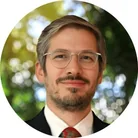
A candid, executive-level conversation between two people who have spent their careers turning complex project and financial data into decisions leaders can trust. Orion Matthews, CEO of Queryon, hosts; Bruno Caldas is the guest, walking through his career, from his first mega-projects to founding his own company, and on to data, BI and AI in project delivery.
One long-form conversation
A single ~60–75 minute episode, structured as a career arc that then opens into themes: projects, portfolio, entrepreneurship, data and AI.
Project & data professionals
Project Controls, PMO, project services, finance/FP&A, business intelligence and technology leaders in capital-intensive industries.
Practical, not promotional
Real career lessons, honest trade-offs and concrete examples of how data and AI improve project performance, for the listener to apply.
Orion hosts
- 20+ years as a programmer, entrepreneur and technology executive
- CEO of Queryon; a product view of the problem: Queryon One
Bruno is the guest
- 18+ years in project controls, capital governance and FP&A
- Mega-projects → portfolio governance → his own company → data, BI & AI
Nothing here attributes specific numbers, outcomes or opinions to either guest beyond what appears in their public profiles or company sites. The questions are open by design: the guests supply the stories.
Episode Agenda
The full running order: each block is its own chapter with talking points and questions. Times are guides for a ~60–75 minute cut; let strong stories breathe. Click any block to jump to it.
Opening
Set the tone and the promise of the episode.
Introducing Bruno Caldas
The guest: who he is, at a glance, and his career journey.
Major Projects
Repar, Simandou and S11D: project-level lessons.
Portfolio Manager · FP&A & PMO
Rising from project to portfolio level.
Entrepreneurship: BC Project Management
Founding his own company.
Mining Industry
His current work: the mining industry in general.
Project Controls & Performance
The discipline at the core of delivery.
Data, BI & Reporting
Turning complex data into faster decisions.
AI Applied to Project Environments
Where AI helps, and where it doesn't.
Future of PMO & Project Services
How these teams evolve with data and AI.
Career Advice
Practical, transferable guidance.
Closing Reflections
End on something memorable and human.
Opening
A short, warm open. Orion frames the episode: a conversation with someone who has spent 18 years making project and financial data tell the truth (on some of the world's largest capital projects) and now builds the tools and teams to do it at scale.
“Welcome. I'm Orion Matthews, and today I'm talking with someone who has lived the full arc of project delivery: from standing on mega-project sites to governing multi-billion-dollar portfolios, to founding his own company and building the data and AI that modern project teams run on. Bruno Caldas, great to have you here. Let's start at the beginning.”
Introducing Bruno Caldas

Bruno has built an 18+ year career (16 of them in mining) at the intersection of projects, finance, systems and analytics. He pairs the owner's-side discipline of governing capital with hands-on project controls, and backs both with advanced business intelligence and AI. This chapter is the quick “who he is”; the story unfolds across the chapters that follow.
“Without data, you are just another person with an opinion.”Bruno's guiding line, after W. Edwards Deming
Career journey
Commodities worked
Across his mining career:
Iron OreCopperNickelLithiumCobaltAluminiumGoldEducation & languages
- MBA
- Project Management, IBMEC (thesis on Risk Management); Leadership program, Harvard.
- Engineering
- B.Eng. Mechatronics, Robotics & Automation, UNITAU; Automation (PLC), SENAI.
- Languages
- English (fluent), Portuguese (native), French (C1), Spanish (professional).
Bruno loves to travel and discover new cultures, and his favourite sport is Formula 1: he combines the two by catching a Grand Prix while travelling, from Milan and Barcelona to São Paulo and Montreal.
- If you had to describe what you do to someone outside your field, how would you put it?
- You've lived and worked in five countries and speak four languages. How did that shape the professional you became?What did building credibility as the newcomer teach you?
- What drew you to the intersection of projects, finance and data, rather than picking just one?
Major Projects
Bruno's first project was the Presidente Getúlio Vargas Refinery (REPAR) in Paraná, a large oil & gas build, and where he learned the fundamentals of planning, scheduling and progress. Then came rail, with the São Paulo Monorail at Grupo MPE. From 2011, mining at world-class scale: Simandou in Guinea and S11D in Carajás. This chapter lives at the project level; the next one rises to the portfolio.
Project spotlight · Simandou (Guinea · iron ore)
An integrated iron-ore mega-project in Guinea: mines, processing, over 600 km of railway and port infrastructure at Morebaya.
Capacity: up to 120 MtpaCAPEX: ~US$20B (total, est.)Project spotlight · S11D (Carajás, Brazil · iron ore)
A Vale mega-project in Carajás: mine, truckless (dry) processing, a rail spur, duplication of the Carajás Railway (EFC) and expansion of the Ponta da Madeira maritime terminal.
Capacity: 90 MtpaCAPEX: ~US$15B- Your first project was REPAR, the oil refinery in Paraná, then the São Paulo Monorail with Grupo MPE. What did those first builds teach you about how big things actually get built?
- What was it like to work in Guinea, in West Africa, on the Simandou iron-ore mega-project?What surprised you most on the ground?
- Building a greenfield project from almost nothing (mine, plant, 600+ km of railway, port), what did that teach you about integrated planning?
- S11D became one of the largest iron-ore projects in the world and a benchmark for delivery. What are you proudest of from that chapter?
- On S11D, logistics were half the story: the rail spur, the Carajás Railway duplication and the Ponta da Madeira port. Back then, one of your progress reports was a photo taken every Friday from the same spot on the railway. If you ran that report in 2026, with AI reading the images, what would change?What could AI catch that the eye would miss?
- These projects run US$15–20 billion. How does that scale of CAPEX change the way you plan, control and communicate, and how do you hold your nerve under that executive pressure?
- When you present numbers that leaders will bet billions on, how do you build the trust that makes them believe you, and how fast can you lose it?
Portfolio Manager · FP&A & PMO
After the projects, Bruno's career rose to the portfolio level. From 2017 he joined Vale's FP&A team for the Base Metals (copper & nickel) portfolio: budgeting, forecasting and Board-level reporting. Then, from 2019 to 2023, he built and led the Base Metals PMO in Canada as Project Controls Manager: capital allocation, investment committees and multi-year governance for a portfolio of roughly US$2–3 billion a year.
From project to portfolio
The shift from controlling one build to governing many: capital allocation, prioritization and trade-offs across a whole book of projects.
Owner's-side finance
FP&A for copper & nickel: budget, forecast, cost control and monthly financial and economic reports to the Board of Directors.
Built the PMO
Built the Base Metals planning-and-governance model from scratch; ran Investment Committees over a ~US$2–3B/yr portfolio; led the Oracle Primavera Cloud rollout.
- You moved into FP&A on the copper & nickel portfolio, reporting up to the Board. How did seeing projects through a financial lens change the way you think about controls?
- Then you built a Base Metals PMO from scratch in Canada. What's it like to build a whole planning-and-governance model from zero?
- Capital allocation means saying no. How do you decide which projects in a multi-billion-dollar portfolio get funded, and which have to wait?What makes a prioritization model people trust?
- What changes, in your job and in your head, when it stops being about one project and becomes about a whole portfolio?
Entrepreneurship: BC Project Management
In parallel with his corporate career, Bruno founded his own company: BC Project Management: a project management, project controls, AI, data engineering and business intelligence firm. It designs end-to-end data strategy and builds PMOs from the ground up (project management standards, templates, procedures, manuals and guidance), turning everything he learned on mega-projects and portfolios into a way for organizations to see their projects clearly and decide faster.
What the company does
PMOs built from the ground up
Full PMO builds (project management standards, templates, procedures, manuals and guidance) plus project controls (cost, schedule, risk, change, forecasting).
End-to-end data strategy
Data engineering and business intelligence: data strategy, warehouses, semantic models, Power BI and automated reporting that replace manual, spreadsheet-heavy processes with governed, scalable systems.
Project controls with AI
Practical AI woven into project controls, for analysis, documentation, reporting and decision support, always with governance, data quality and human oversight in the loop.
Capabilities
Business Intelligence
Power BI dashboards, KPI frameworks and executive reporting: a single, trusted source of truth for leaders.
Advanced Analytics & AI
Machine learning, forecasting, classification and anomaly detection, plus AI assistants for analysis, documentation and decision support.
Data Engineering
Data warehouses, ETL/ELT pipelines, ERP/API integration and data governance: the plumbing that makes reporting reliable.
Reporting automation
Automated data flows (e.g. SAP-to-Power BI) that free teams from manual, spreadsheet-heavy reporting cycles.
Digital transformation advisory
Assessing maturity, prioritizing high-value use cases and delivering roadmaps through to implementation and adoption.
Mining & Oil & Gas focus
Deep roots in capital-intensive industries: where projects are big, data is fragmented and good decisions are expensive to get wrong.
- What made you decide to start your own company, BC Project Management, alongside everything else you were doing?
- What is BC Project Management, in your own words, and what problem is it built to solve better than anyone?Who gets the most out of it?
- You went from doing the technical work to running a business. What was the hardest habit to unlearn, and what does a technical person underestimate about the business side until they live it?
- What's the belief at the center of BC Project Management that ties project controls, data and AI together?
- Where do you want BC Project Management to be in a few years?
Mining Industry
“I'm currently working in one of the biggest mining companies. For this podcast, we will talk about the mining industry in general.”
Bruno's current work sits at the level of a Business Intelligence & Project Services Manager in the mining industry: standardizing reporting across a large, diverse portfolio, and bringing data, analytics and AI into how mining capital projects are planned, governed and delivered. This chapter keeps it industry-wide: seven commodities, the full mine-to-port chain, and what BI and AI are changing in mining today.
- You've worked across iron ore, copper, nickel, lithium, cobalt, aluminium and gold. What changes from one commodity to another, and what stays the same?Which was the steepest learning curve?
- How do you see Business Intelligence (Power BI) in the mining sector today? Where is it making the biggest difference, and where is the industry still behind?
- Mining means huge CAPEX, long decision cycles and remote logistics. What does the sector still get wrong about forecasting and risk on big capital projects?
- A lot of your current work is standardizing project reporting and bringing AI into lessons-learned. Where's the biggest opportunity for the mining industry there?What would a truly data-driven mining project look like?
Project Controls & Performance
Now the conversation shifts from Bruno's story to the craft itself. Project controls (cost, schedule, risk, change, forecasting, reporting, performance measurement and governance) is the nervous system of any capital project. This chapter explains it plainly and gets at why it decides whether a project performs.
- For someone who's never heard the term: what is project controls, and why should a CEO care about it?
- Where's the line between project controls and project management, and where do the two get confused?
- Forecasting is where controls earns its keep. How do you build a forecast people actually trust, and handle the optimism bias baked into most plans?
- You've stood on remote sites and you also build the systems that model them from afar. What does field experience catch that a model on a screen never will, and where can a digital tool dangerously oversimplify?
- What's the smallest set of controls a small team can start with tomorrow and still get 80% of the value?
Data, BI & Reporting
How the right business intelligence turns fragmented project, financial and operational data into clear, reliable decisions: Power BI, data warehouses, semantic models, automated reporting and the governance underneath. Plus the honest question every organization faces: when does Excel stop being enough?
- A dashboard is easy to build and hard to build well. What separates a dashboard people ignore from one they run the business on, and how much is design versus the data model underneath?
- Let's be fair to Excel: where is it genuinely the right tool, even for a serious organization, and when does it quietly become a risk?
- The hardest part isn't the dashboard; it's the moment a leader looks at it and acts. What makes data actually change a decision, rather than just inform it?
- Everyone wants dashboards and AI; almost no one wants to fund data governance. How do you make that unglamorous foundation matter to leaders?Where do you start with governance?
- Where do BI projects most often fail: the data, the model, the design, or the adoption?
AI Applied to Project Environments
Getting concrete about where AI helps in project work (meeting summaries, documentation, reporting, data analysis, decision support and knowledge management), and where it doesn't. The interesting part is the guardrails: governance, data quality, security and human oversight.
- Cut through the hype: what's an AI use case in project work that's genuinely saving you time today?
- Where would you never let AI near a project controls process without a human firmly in the loop, and is it data quality, security, or accountability that worries you most?
- You're building an AI-driven lessons-learned approach, combining historical data, benchmarking and AI. What could that change about estimating accuracy and risk?
- For a project professional who's curious but cautious about AI, what's the first thing they should try, and the first thing they shouldn't?
- Orion, you build AI into products. Where's the line between AI that helps a decision and AI that quietly starts making it for you?
Future of PMO & Project Services
How PMO and project-services teams change with data, automation, AI, integrated systems, predictive insights, better governance and faster decision cycles, and what the analyst's job becomes when the reporting runs itself.
- If reporting increasingly runs itself, what does a great PMO analyst actually spend their day doing five years from now?
- Predictive insight is the promise everyone makes. What has to be true, in data and governance, before prediction is actually trustworthy?
- Will the future PMO be smaller and sharper, or bigger and more strategic? What's your bet?
- What skill should every project-services professional be building right now to stay relevant?
Career Advice
Practical, transferable guidance for people building careers in project management, controls, BI, data, PMO, AI applied to projects and international work, framed as invitations for stories, not lectures.
- For someone starting in project controls, PMO or BI today, what's the one skill you'd tell them to over-invest in?
- How does a technical person grow business judgment without losing their technical edge?
- What's a failure, or a risk that didn't pay off, that ended up teaching you more than any success?
- Was there a mentor, or a single conversation, that changed the direction of your career?
- For someone dreaming of an international career, what's the honest first step, and the honest hard part?
- What advice would you give your 25-year-old self, knowing everything you know now?
Closing Reflections
How the conversation closes: the number one takeaway, and the note the episode ends on.
The episode ends on the human note, not the corporate one. Two people who turn messy data into decisions leaders can trust (one from the mine site, one from the codebase) agreeing that the goal was never the dashboard. It was a better decision, made in time. Asked for the one takeaway a listener should keep, Bruno lands on people: build a strong data foundation team, and don't leave it all to IT. The last word is about people, not tools.
The Big Ideas
Three ideas that carried the released conversation, drawn on the whiteboard. Quotes are lightly condensed; timestamps are approximate.
Added by the show from the released episode; this section and those that follow are available in English only.
AI multiplies whatever data foundation it lands on. On weak data it does not fail loudly; it polishes the garbage until it looks credible.
Polished garbage. “AI will smooth it out and make it look like it's correct.” The most dangerous quadrant.
The intelligent PMO: integrated, intelligent, predictive. Agents, benchmarks and forecasts a controller can defend.
The visible mess. In Excel or Power BI bad data “kind of looks bad. You can tell it's wrong.” Painful, but honest.
Solid but manual: senior specialists spending the first 15 days of every month building reports by hand.
The target state Bruno sketches: every source feeding one governed foundation, with a medallion architecture serving both the agents and the dashboards.
How Bruno scaled every PMO he built: not a top-down mandate, but a visible win in the most mature corner of the business that makes leaders ask for more.
Start small…
- Begin in your comfort zone
- The most mature system first (SAP)
- An MVP in one business, one region
…then scale on pull
- “I would like this in my department as well”
- Sponsors fund the next system
- The PMO becomes the company benchmark
Books & Takeaways
No book got pitched on the air this time; the conversation stayed on the work. What the episode leaves behind instead: one guiding line with a long lineage, six takeaways in Bruno's own words, the toolbox that built his career, and every link you need.
The guiding line
“Without data, you are just another person with an opinion.”Bruno's guiding line, after W. Edwards Deming
Shelf pointer (ours, not an on-air pick): Deming's management thinking is collected in Out of the Crisis. Every recommendation from every episode lives on The Major Project Bookshelf.
The episode
- Listen
- Apple Podcasts · Spotify
- Bonus · 17m
- The Curious Engineer: Apple Podcasts · Spotify
- Transcript
- Full transcript of the main episode
- The guest
- Bruno Caldas on LinkedIn · BC Project Management
- The show
- themajorprojectpodcast.com · conversations from the people building projects over US$1B
Takeaways, in Bruno's words
Keep the data foundation in the team
“Don't have 100% of your data foundation on the IT team. You need to have someone with this background in your team.” ~1:19:05
AI on bad data delivers nothing
“If you are really good in AI and you are not good with data foundation, [it] doesn't mean anything. You will not deliver anything.” ~59:10
Start where you're already strong
“My recommendation is start with what is more mature, and then you go to the piece that needs more work.” ~51:15
Right-size the model to the task
“You see a lot of people using a Ferrari to go to the groceries. No, you are using the wrong AI… you don't need to use a Ferrari.” ~1:03:10
Studying AI is now part of the job
“Sometimes what you are studying [in] January, it's outdated in March… now it's part of my routine to study AI.” ~57:20
Prove it small, scale on proof
“I would go small, do an MVP in maybe one business, one region, and then extend when it's proven.” ~1:18:10
The toolbox, as heard on the show
Primavera P6 & MS Project
Where it started: his first billion-dollar project, an oil and gas refinery, had “a full room of people just taking care of the Primavera P6”, a schedule he remembers at 80,000 activities ~3:50. The subway-and-monorail job that followed taught him the same craft in MS Project ~5:00.
Microsoft Power BI
“Then 2017 came and Microsoft launched Power BI, and that's changed everything.” ~28:30 It was already inside the company's Office 365, so he taught himself from YouTube and has been the Power BI SME everywhere since. (Power BI actually reached general availability in 2015; 2017 is when it landed at his company.)
SAP (PS, FM and MM modules)
Going deep on SAP in FP&A made him the trainer: “I trained around three hundred people for SAP” across PS, FM and MM ~27:50. His rule stuck: “Let's treat our SAP well”, because reliable source data is what every later dashboard stood on ~32:15.
Medallion architecture
His target state for the AI-era PMO: raw data from every product and region flowing through a medallion architecture, “maybe the silver layer for our agents and the gold layer for your Power BI dashboards” ~1:10:45.
Claude & ChatGPT
His personal stack: he designs new Power BI models by talking dimensions and missing charts through with Claude ~1:05:40, and uses ChatGPT's model tiers as his classroom example for right-sizing the tool: don't take “a Ferrari to go to the groceries” ~1:03:00.
Northwestern University (MBA program)
The teaching credit comes from Orion on air: “you teach about BI at Northwestern University in their MBA program” ~1:01:30. Bruno's answer is all method: fundamentals first (how a token works, how you train an AI), then markdown, then agents ~1:02:30.
Quote Bank
The best on-the-record lines, gathered in one filterable place. "Highlight" marks the lines most worth scrubbing back for; quotes lightly condensed, timestamps approximate.
Opening ~0:00–1:00
- Highlight"In this pod, we are learning from the people that work on projects over one billion dollars, trying to tease out those lessons and learnings from these big endeavors."
- "He’s got an 18-plus year career. 16 of them are in mining, and he is at the intersection of projects, finance, systems, and analytics."
- "Mutual contact friend said, ‘You gotta talk to Bruno. Bruno’s amazing.’"
Introducing Bruno Caldas ~1:00–7:00
- "When I was, like, 14 years old, I worked in a cyber cafe. I built, like, 20 computers. So I started with hardware… I was in contact with computers all the time, so the digital piece was always my passion."
- Highlight"I was responsible for the Primavera P6. At the time, we had a full room of people just taking care of the Primavera P6… I believe it was 80,000 activities."
- "At the time there was no internet, so we are doing PDF books. I was printing 400 pages, preparing the books all by myself, reading and doing the exercise in the computer… It was still possible to learn by yourself without YouTube, but it was a little bit harder."
Major Projects ~7:00–23:00
- Highlight"I didn’t search the country in the internet, ’cause I said, ‘I think if I’m gonna search, maybe I’m gonna see the other side of Africa, so let’s just go and see what happens.’ I received my onboarding July 4th. In July 7th I was already on a plane to Guinea."
- "The first month that I arrived in Africa, the houses are not developed, and after almost two years there, we saw the community growth… 70% of the labor was local, so we are developing a whole country."
- "If you have a headache, you need to do a malaria test, because malaria can kill you in 48 hours."
- Highlight"I was walking the full railroad, the 1.5 thousand kilometers. So every night I was sleeping in a different city just to see the progress of the railroad."
- "Every Friday we are doing a drone picture from the same site… We are able to update our Primavera just looking into these high-quality pictures. We are building reports from those pictures."
Data, BI & Reporting ~23:00–26:00
- Highlight"I sat with him the whole afternoon. I asked him to explain. He sent me this Excel later. I was able to do reverse engineering on that Excel, and that’s how I started to do dashboards."
- "We had two monthly reports: one with 200 pages, Word, PDF, that will be shared with the whole team, and one more executive version with three pages, just what the leadership needs to see. When you have only three pages, you need to be more visual."
- "It’s easier to see some dashboards instead of reading 200 PDF pages. At the time we didn’t have AI to summarize a 300-page PDF."
Portfolio Manager: FP&A & PMO ~26:00–37:00
- "I remember a team that were spending the first 15 days of the month building reports. So we were paying very expensive senior analyst specialists to, instead of bringing insights from the data, just creating reports."
- Highlight"You know, the garbage in, garbage out. So let’s treat our SAP well… If you are receiving good data from all of your sites, from all of your projects, you can do amazing analysis in your headquarter."
- "Was not just billion-dollar projects, was the full portfolio of projects… We are talking about 5,000 projects per year, CapEx of $10 to $50 billion per year when you combine 100% of the portfolio."
- "My first role was to question the big variance, ’cause this is what the CFO wants to see. Why we are spending 10% more in February, or why we have spent 20% less? What’s happening?"
- "If your project is not performing, another project’s performing really well, or maybe there is a change management or a claim that needs an extra $10 million, you need to find a donor."
Project Controls & Performance ~37:00–51:00
- "We had a cap of budget, so I was able to create capital allocation scenarios: what would be the best projects for the next five years, and what would be the next project for the next year."
- Highlight"He said in the middle of the meeting, ‘Oh, we need this guy here.’ And that’s how I was hired for the headquarter in Toronto. This meeting changed my life… I got a work permit to move to Canada. I was doing what I loved."
- "Everything on a dashboard, a one-stop shop, so you can see the risk management of your projects, the cost, the schedule. We are building the full one-stop shop, like a project control tower for the whole portfolio."
- "We have like 10 years on the past plus 10 years in the future. In my dashboards you are able to see 20 years of data… That’s why you have a really strong data foundation. It’s really important."
- "My recommendation is start with your comfort zone. Build something really nice that people will see and say, ‘I would like this in my department as well. Can you help?’ Start with what is more mature, and then you go to the piece that needs more work."
Mining Industry ~51:00–56:00
- Highlight"The iron ore, let’s round it to 400 million tons. So if you reduce $1 on the whole process, on the whole cost, you are increasing $400 million on the EBITDA."
- Highlight"This project is truckless. What truckless means? Every time the mine develop, the conveyor belts walk together. And this is 100 million tons per year capacity, completely truckless. So no diesel, no CO2."
- "I think the operation is maybe five years ahead of the corporate, ’cause they have the dollar return very quick if they invest in technology on the operations."
AI Applied to Project Environments ~56:00–1:07:00
- "I am doing AI immersions every month, and sometimes what you are studying January, it’s outdated in March. Things are changing so quick that you need to keep studying. So now it’s part of my routine to study AI."
- Highlight"If you are really good in AI and you are not good with data foundation, doesn’t mean anything. You will not deliver anything."
- "The CEO of Microsoft, I think last year, said that your AI strategy and your data strategy are the same strategy. They can’t really be separated, and I believe that."
- Highlight"You see a lot of people using a Ferrari to go to the groceries. No, you are using the wrong AI… You don’t need to use a Ferrari."
- "I do a brainstorming a lot with AI, so I have someone to discuss with, like we are doing here. I do my own podcast with my AI just to discuss about the project and see what I’m missing."
Future of PMO & Project Services ~1:07:00–1:18:00
- "The new way, you have the integrated, intelligent and predictive. Today we have a lot of manual, disconnected and reactive."
- "Today we have a problem that data is in silos. You don’t really know the information of a project in South America, another project in Australia. You cannot do any benchmarking."
- Highlight"Through a medallion architecture, get raw data from different products, different regions… and then maybe the silver layer for our agents and the gold layer for your Power BI dashboards."
- "The first step will need a lot of people, because companies have multiple data source: SAP, Procore… Primavera. So make sure that the data foundation is there. It’s gonna need a lot of people."
- "The company’s too big to do everything at the same time… I would go small, do an MVP in maybe one business, one region, and then extend when it’s proven. Even with the top-down approach, I think it’s too hard to do everything at the same time."
Closing Reflections ~1:18:00–1:21:15
- Highlight"Data was really important before AI. Now it’s even more important. So focus on these people. Don’t have 100% of your data foundation on the IT team. You need to have someone with this background in your team."
- "I think the ultimate goal for the company is have a one-stop shop for everything: for the dashboards, for the agents, a chatbot that can help you, new projects benchmark."
- "Thank you very much. It was an honor to be part of your podcast."